Developer: Capcom Publisher: Capcom Year: 1988 Genre: Platformer System: NES
Inspired by Jeff Gerstmann’s NES games ranking, I played through all of Mega Man 2 for the first time in about 10 years or so. I was a little surprised it had been that long since it’s my favorite NES game (and still is) but that’s the date for the achievement on the Mega Man Legacy Collection and I don’t think I’ve completed it since then. There’s no hot takes in this one, I still love it and agree with all the opinions on it. All the robots are solid designs and they had a lot more to choose from than later entries, the soundtrack is fantastic, that one boss level where you can softlock yourself is a bit poop, none of these are hot takes. I also like how purple and blue so many of the game’s levels are. It’s the bisexual pride flag of Mega Man games.
I don’t necessarily agree with the takes that later games get bad. I like some of the later mainline Mega Man games quite a bit and I’m looking forward to the new one next year, but I do think they get less weird over time after the formula is figured out. I wouldn’t say the X series is weird, just kind of a 90’s edgy that I don’t really care for and way too much lore. There’s stuff in Mega Man 2 like the alien boss at the end and the really quiet and moody leadup to it that I adore, and some of the Wily levels before it are very grungy in a way I like.
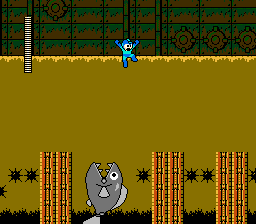
Look at how gross that is! I love it. Also there’s only two of those fish in the entire game. They just kinda jump up and try to eat you. I just like that they made a whole enemy and barely use it. It’s neat.
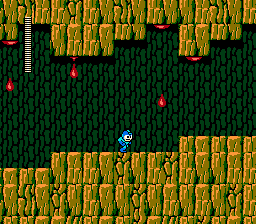
Like I said earlier, I love that the final level is just this cave with no music and only these drops you can easily avoid, but they make a neat little drop sound when they hit the floor. I don’t recall any later Mega Man games that are more focused on establishing a mood and aren’t interested in provided a challenge before the boss. I think it’s cool.
Anyway, I know it’s cliched to talk up Mega Man 2 because it’s been done to death and every video game music band has covered that Wily Castle music theme to death but it’s my site and if I replayed one of my favorite games, then so be it. I should probably go back and play the Mega Man Legends series, I think I would still enjoy those quite a bit.
Mega Man 2 is available in the Mega Man Legacy Collection, which is available on many platforms including Steam.
Developer: Nintendo Publisher: Nintendo Year: 1986 Genre: Action-Adventure System: NES
Look, obviously I am not going to have any unique takes on Metroid, one of the most discussed games ever, but I just completed it and I’m pretty proud of that so into the Game Log it goes. I think everyone reading this knows what Metroid is as well so I can skip that bit too. I still love the game even though it’s got some fiddly and frustrating bits from it being so early in this style of game. The only major pain point really being that if you die, it takes ages to refill your health and missiles from grinding enemies.
I’m mostly excited about completing it because it’s a game that I have owned literally my whole life. It came out in 1986, a year before I was before, and I always played it on and off over the decades and yet never completed even though I’m a big fan of the series and have completed many of the later games. What’s odd is that it didn’t even really take me that long really to complete this time. Maybe about six hours or so. I still thought it was a challenging game but it’s not really that long so I’m a little surprised I never completed it before when I had entire days free to play video games and write down passwords. It’s a very weird, and highly recommended, experience to complete a game that has existed your entire life that you’ve poked at a few times so if you got a few of those hanging around, consider knocking one out.
One of the things I really love about the original Metroid is just how weird and mysterious it is compared to later games in the series. It’s not an entirely fair comparison, of course the first game in a series is going to feel a lot more new than later games and some of the later games do have weird bits, but at the same I think it would be nice to see more unexplained stuff and weird worlds instead of revisiting some of the same characters and places so often. I don’t think this is the same as doing a “back in my day games were hard and blah blah blah” because this isn’t what made the original Metroid difficult. I’m just saying the vibes are very good and it’s less focused on telling a linear narrative, which is why I don’t care for Metroid Fusion as much as other folks even though it’s got some weird stuff in there (that I think it over explains). It’s a similar arc as the game’s inspiration Alien, lots of weird unexplained stuff and then it kinda becomes more normal and overexplained. A more modern example of what I mean is the game Axiom Verge, it’s got lots of weird stuff that you never fully get. I would love recommendations if there’s any other indie Metroid-likes that I’m missing out on with great weird vibes.
This probably sounds like I’m basically saying the Metroid gets worse over time and I’m not. I love most of those later games too. Some of the sequels have even weirder things like all the various designs of the Metroid creatures in Metroid 2 and how much it feels like horror at certain points. I just want more of it.
Anyway, no hot takes here. I still think the first Metroid is very good and I’m looking forward to the new one that was just announced. If you’ve got a game that you like but haven’t completed even though you’ve owned it for a few decades, go complete it. You’ll probably find it’s not as impossible as you remember.
Metroid is available on the NES Virtual Console for the Nintendo Switch but you can probably find ways to play it elsewhere.
Developer: Mike Piontek Year: 2026 Genre: Adventure System: Macintosh
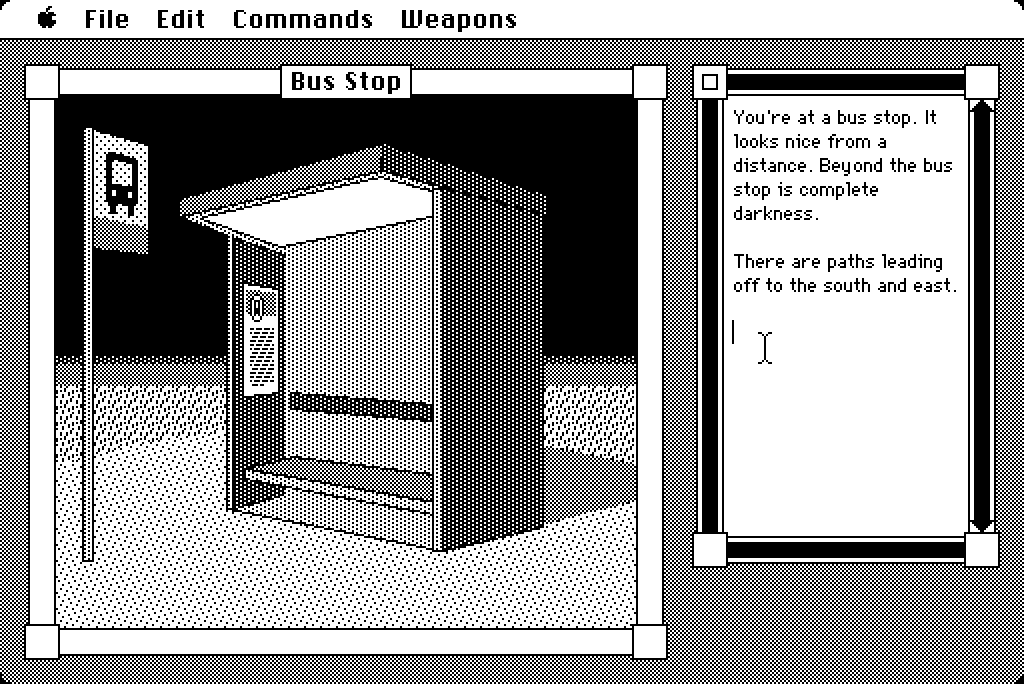
Screenshot taken from Itch.io page
After posting about the game in an indie game roundup early this year, I finally made the time to play through Transfer Point. Transfer Point is a new adventure game for the classic Macintosh, but playable in the browser as well. It was created in World Builder, a program released on the Mac in 1986 that allowed people to make their own games. You play as a woman who finds herself at a bus stop, but with no memory of how she got there and only remembering parts of her past. The game itself is first person, with you using a combination of clicking on things and typing into a text parser.
I was very excited to play this one and wasn’t let down. I had occasionally watched Mike design the game on his robotspacer Twitch channel and thought it looked great. Even though I didn’t grow up with this era of the Mac, I love how games on the platform look with their black and white art. It’s just very comforting to me. Luckily the rest of the game is solid as well. I enjoyed the story in this (you play as a woman married to another woman!!, not really a spoiler!) and while it’s not really a comedy, there’s some bits in here that I thought were very funny. There was a death scene in the game near the very beginning that I absolutely loved and made me really happy to see. It’s not a game with many deaths if you are an adventure game fan concerned about running into them. A nice thing about waiting a day or two to write a post about a game is that I can think about some plot elements for a bit before really settling on how I feel about them, which includes a twist later in the game, nothing too twisty really, that I wasn’t sure about at first but I like it. I think the puzzle design is solid for the most part too. There was one puzzle that even the Invisiclues apologizes for, but other than that one I think the game has good and fair puzzle design and if you do get stuck, the designer has provided the Invisiclues to look at, which give you small hints instead of spoiling a puzzle completely. I would love to see more adventure game devs provide this with their games.
Since I have only played a few World Builder games before this, I was fascinated by the things that seem like requirements for making something in the engine. The game has a Weapons column, but you never need to attack anything. The designer manages to make use of the section by placing “use rapier sharp wit” under there and makes it work, but I think it’s fun seeing people work with engines like this that force the designer to make choices like that. There’s also a Search command, I think it’s probably a leftover bit from text adventures, that you basically use in every room to see if there’s anything hidden. It’s a little odd if you don’t play text adventures since you can see what you’re looking at in the panel on the left, but it’s necessary for completing the game.
I’m trying to avoid talking too much about specific elements in this that I loved because it’s a fairly short game (took me about 1-2 hours) and spoilers in adventure games can sometimes hurt enjoyment for some players, so apologies about being so vague about the content, but I highly recommend this if you’re a fan of adventure games and the classic Macintosh look. While you can buy the game on Itch.io to get a version of the game that runs on Macintosh and also some nice bonus materials, you can also play it in your browser window if that sounds much easier for you. There’s a version in development for the Playdate to look forward to as well, which you can follow development of on Twitch.
Transfer Point is available for Macintosh and browsers on Itch.io.
Last week on my birthday I issued a blog challenge for folks to write about an obscure game of their choice. As the challenge states, what is “obscure” is incredibly subjective and I just wanted folks to pick what they thought was obscure and have fun. I was shocked by how many people decided to participate and decided to do a roundup of all the ones I knew about. If I missed yours, please let me know in the comments. Technically the challenge isn’t over, there’s no end date, if you want to write about an obscure game then go ahead. I had so much fun reading all of these and I hope that you do too.
Let this be a lesson that if it’s your birthday, you can issue a Blog Challenge and people will actually do it. I hope you consider doing your own blog challenge and if you like any of the posts in this roundup, add the blog to your RSS feed reader.
The Blog Posts
This is a post that starts off being about Dragon Strike and an unreleased prototype but goes into how your ttrpg should have some sort of gimmick.
Fledgling Manor screenshot from Steam
Silas praises the indie horror visual novel Fledgling Manor.
wildweasel writes about the simulator Gazillionaire, which I never played but somehow have a boxed copy of it sitting on my shelf. So maybe it’s time for me to finally open that one up and give it a go.
I love the Heretic and Hexen games so it made me happy that someone else enjoys Heretic 2, which has not been rereleased.
Grayson has launched a blog to write about game and the first post is about Indiana Jones and the Infernal Machine. Grayson admits that this stretches the definition of obscure but I think it gets a few points for talking about the N64 version of the game, which I believe was exclusive to Blockbuster.
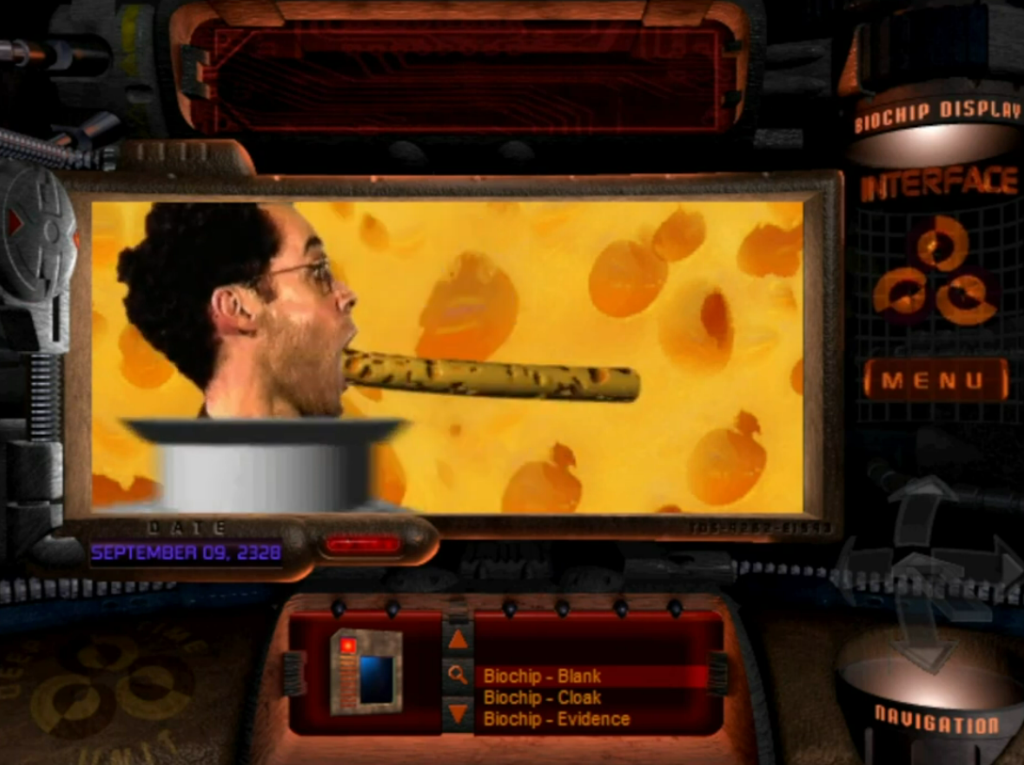
Journeyman Project 2 screenshot taken from my Cheese Girl video
Folks, we got a post about The Journeyman Project 2: Buried in Time. This game rules and you should all play it. Look at this in-game ad for Cheese Girl! I know the blog post here isn’t as big of a fan of JP3, but I also recommend that one. Love the series!
Pete Davison writes about the racing game Jupiter’s Masterdrive for the Amiga and Atari ST. I’m a big Amiga fan and always love learning about games for it I never heard of before.
SpindleyQ talks about the experience of type-in games, and specifically the game Micropuzzle, for the Commodore Vic-20.
Mono by Binary Zoo is an indie shmup from the 00s, before Steam took off, an era I love to read about. Looks like you can download it from the Internet Archive too.
I knew of the Monster Rancher series but never even knew it had spinoff games like Monster Rancher Hop-A-Bout.
Odama is a Gamecube game that I remember wanting to really play but never have, but I’m happy to hear that it’s weird and rules.
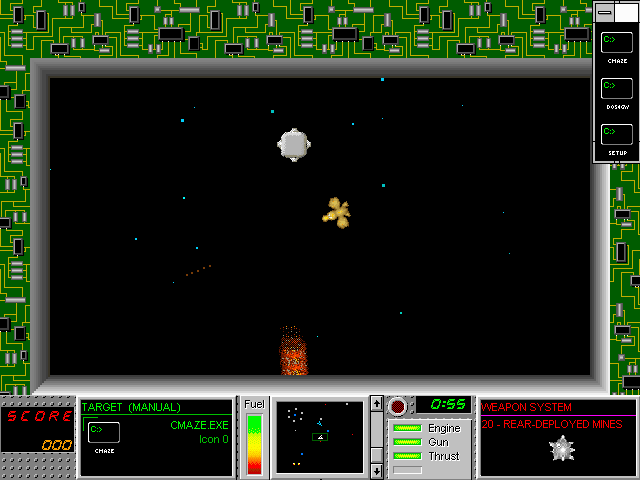
Operation: Inner Space screenshot from MobyGames
Operation: Inner Space is a game for Windows 3.1 I never heard of, which is always exciting to learn about, and I also get very excited when a shareware developer from the 90s is still selling that game on their own website.
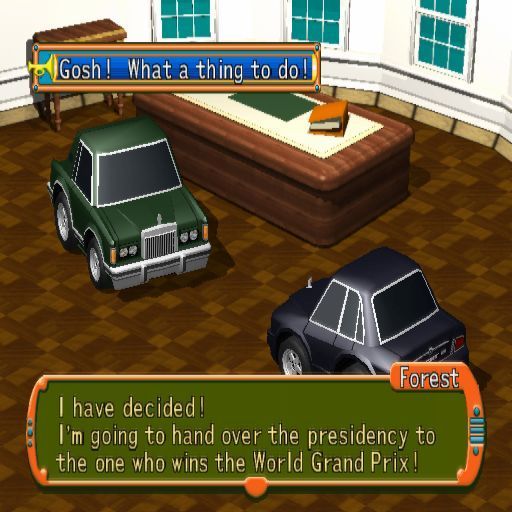
Road Trip Adventure screenshot from MobyGames
I saw a few folks posting screenshots from Road Trip Adventure and now I know what the deal with that game is.
I also like when people write about games that are completely average or don’t quite work but still have interesting or good bits in them, so I appreciate this post about Shepherd’s Crossing.
I was so happy to see a post about Shockwave web games, more specifically ones using the Lego license. Shockwave games are a whole thing that I never see anyone talk about these days but I played so many of them.
It’s great when folks write about their memories of playing a dead MMO because even when the files are preserved and the game is still playable, the one thing that can’t be recreated is the experience of playing it at launch, so at least folks can write about what it’s like, such as this post about Richard Garriott’s Tabula Rasa. I’m not the biggest Richard Garriott fan but I think he’s really interesting.
Weird games that shipped with versions of Windows are another thing I love to read about, so thanks to The Works of Egan for this post on Tinker, a puzzle game I never heard of.
LEMONPOPPYSEEDGAMES has launched a new blog and the first post is about the ttrpg Quest.
I challenged folks to write about very obscure stuff, unfinished prototypes, lost games, etc and this post delivered with Zombie, a game that the author doesn’t even know where the game came from.
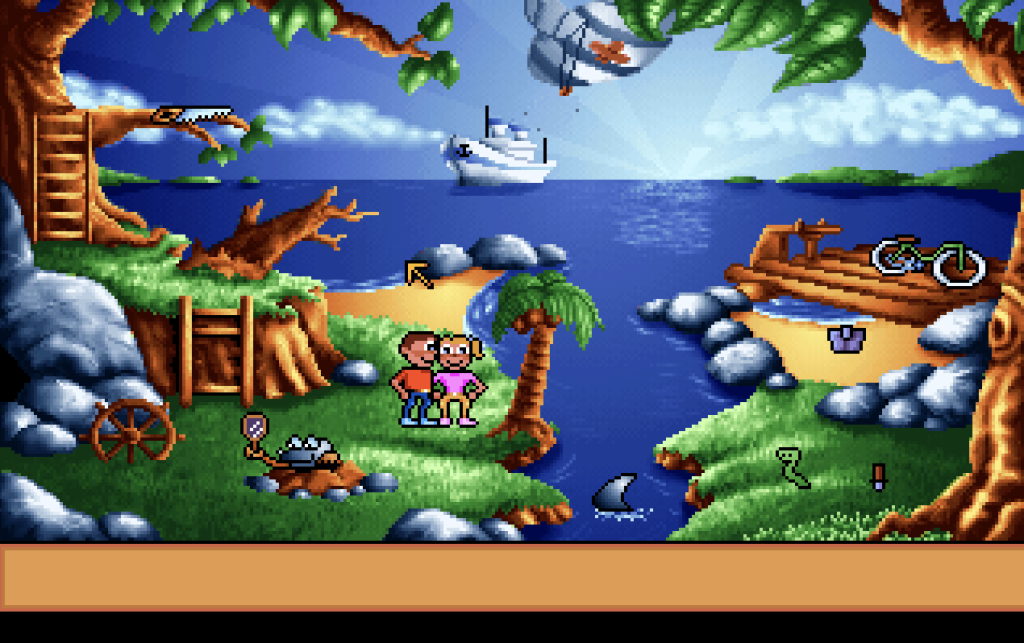
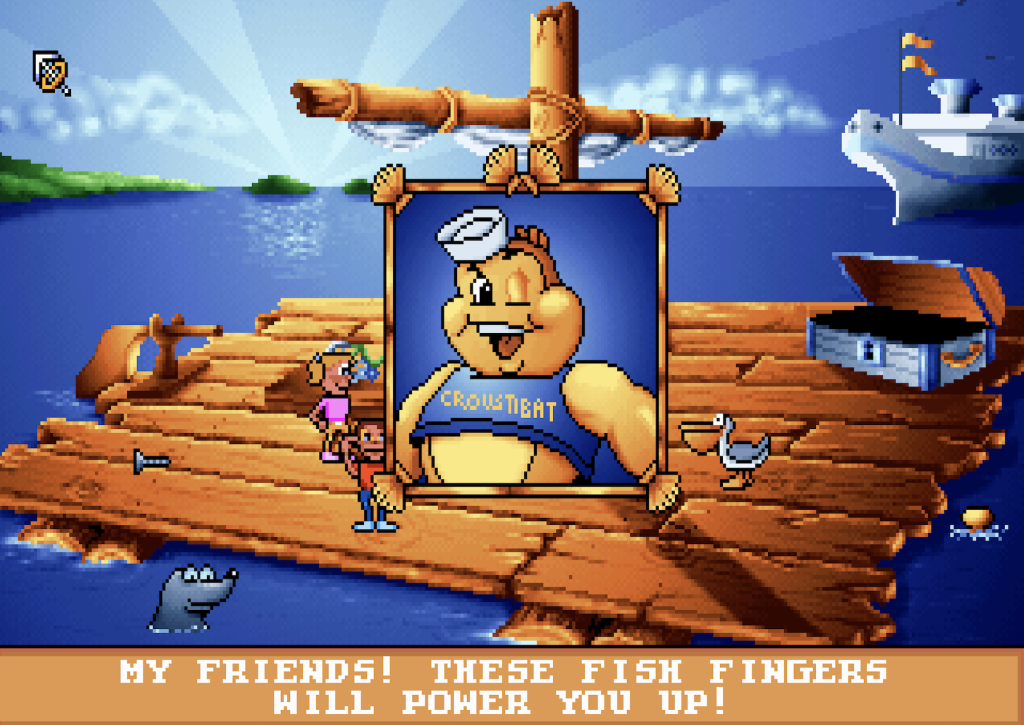
Screenshot of Croustibat
And then finally, if I’m going to tell people to write about an obscure game then I suppose I should too. So I wrote about Croustibat, an advert adventure game for fish sticks by the folks that made the Gobliiins adventure games.
And obviously not everyone can drop everything to write about an obscure game so some folks were kind enough to recommend older blog posts they wrote about obscure games.
Brown Benign Beast writes about two board games, Situation 4 and Situation 7, as well as a board game design they had in a dream.
Gretchen covers so many obscure games on her Backloggd including Shadowgate 64, which I have played but it was decades ago and now I want to revisit it.
Eli wrote TEN pages for a journal about the Sega CD game SWITCH / PANIC!
Computer Chronicles Revisited covers The Tower of Myraglen, which appeared on on an episode of the show from 1987.
After issuing a challenge to folks to blog about an obscure game, I figured I should probably engage with this as well so I pulled a game that has been sitting on my backlog for a long time, Croustibat. Croustibat is an advert game for the Croustibat line of fish products by Findus and prominently features the mascot, a fish that is also named Croustibat. Apparently you could get the game by sending a letter to Findus along with the money to cover shipping and handling. The game was developed by Coktel Vision, the folks who developed the Gobliiins series of adventure games. It plays very similar to those games, especially Gobliins 2.
You have two characters, a boy and a girl, and must solve puzzles by doing your typical adventure game stuff like picking up items and using them on objects. There is technically a plot about aliens attacking a boat but it’s basically non-existent in the game itself, with instructions focusing on getting to the next location. Only specific player characters can successfully use objects and inventory items, but you don’t really know who until you try both player characters. Much like the Gobliiins games, the lack of hints or instructions mean you do a lot of brute forcing in this one as well. I didn’t think it was as frustrating as some of those games though, since it’s aimed more towards children and you are only on one screen at a time so the amount of objects to interact with is very small. I think this is a good thing. I am a fan of the Gobliiins series but nearly all the games in the series have a few puzzles where you brute force item combinations just to make some progress. That said, there was still a moment or two where I did not understand why the solution I tried worked, which is never a great sign.
I suppose the main gimmick in this one is that during each screen/level, the Croustibat mascot’s hat will appear. Picking it up will make the mascot appear and give you fish sticks, which make you extra strong. This is only ever used by the girl and exists to help her with a specific puzzle on each screen such as cutting down a tree. I’m assuming there’s someone out there on the internet that is physically attracted to the Croustibat mascot but I’m not going to confirm that.
Unlike Gobliiins, none of the player characters are interesting to watch or really do anything funny when you fail to do an action, which is sorta the highlight of those games. It makes sense, you aren’t going to beat up children too much in an advert game for kids, and there’s still moments like a child being frightened by a spider or a coconut falling on their head, but it does mean that there isn’t a lot going on. The kids don’t really have their own personality like the Gobliiins games either. I still think the art for all the characters is charming enough though and it has some fun animations.
My only other real gripe is that you need to transfer items between characters and it frequently just did not work for me so I had to keep trying until it would eventually work.
I wouldn’t necessarily recommend the game if you’ve never played the Gobliiins games before, unless you have a fascination with advert games or a strong nostalgia for 90’s adventure games. It’s not actually bad but it’s also not very interesting either but there’s worse ways to spend 15-20 minutes. I think the game is far more interesting if you played the Gobliiins series since it is by the same devs, plays very much like an easier Gobliins 2, and even uses a lot of the same sound effects and cursor. You can find the original French version across the internet since it was a free game but I played the unofficial English translation on the Internet Archive, which is playable in the browser but I downloaded it and ran it in ScummVM.
On a weird final note, my 6 year old saw me playing Croustibat and said “Are you playing that Goblins game?” I didn’t even think I had played any of those with her before (maybe Goblins 3?), certainly not in a long time, but now I will be thinking about if I play too many weird French DOS games around my kids or not. Then again, I could also get that Gobliiins Collection on the Switch which features mouse support for the Switch 2.
Croustibat is available on your favorite abandonware site such as MyAbandonware, with the unofficial English translation on the Internet Archive.
Developer: Nifflas and Bit Kid Publisher: Bit Kid Year: 2026 Genre: Platformer System: Windows
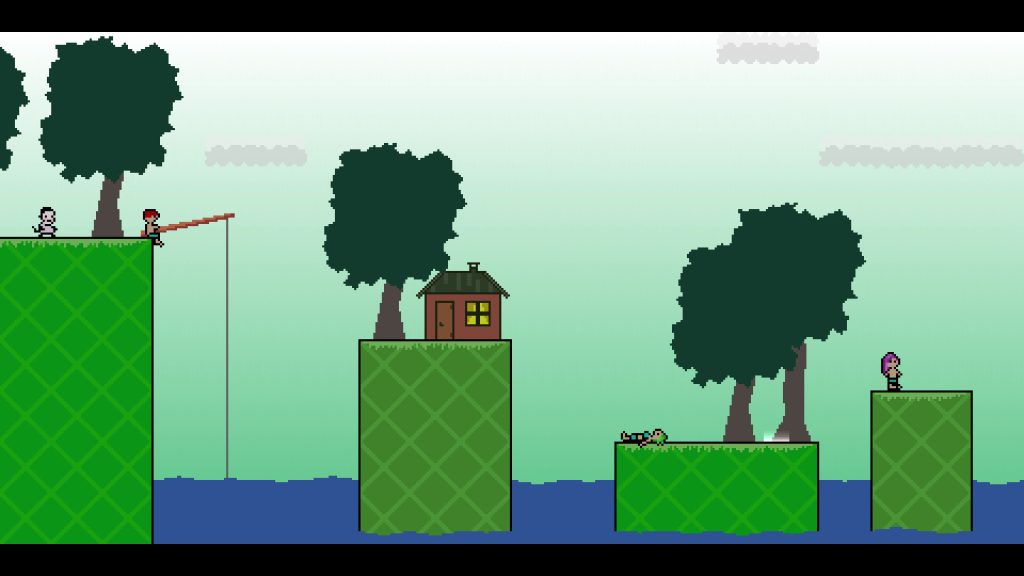
This game has so many little guys
I have fond memories of playing Knytt so I was very happy to see that it got an official rerelease recently to celebrate the game’s 20th anniversary. If you haven’t played it before, it’s a freeware game where you have crashed on a planet and need to explore the planet by platforming around and finding parts to repair your ship. There’s no combat and only a handful of enemies that can hurt you. If you touch one of them or a hazardous element of the planet like lava or water, you teleport to your most recent save point. The save points are scattered frequently around the world so it is not an issue if you touch something you shouldn’t. The world itself is fairly big and maze-like, but you can also hold down a button to have the game point you in the direction of the nearest ship part, so it never feels overwhelming. It’s an incredibly chill game and exactly what I needed to replay at this moment.
It was just really nice to revisit the game since it had a big impact on me in college, when it originally came out (lol I’m old). That, and Seiklus (EDIT: I originally got it mixed up with Within a Deep Forest, another freeware game I recommend), a similar game with a relaxing vibe, both seemed like they came out sorta around the same era when there was maybe an explosion in freeware games. I wasn’t a part of any scene so I was just stumbling across this stuff on sites like Game Hippo and Retro Remakes. Laura Michet’s blog has far more interesting thoughts about this game than I do. It’s just a game that means a lot to me because I didn’t really have the money to spend on games and really appreciate that there were folks making some really interesting stuff for free. I suppose you could argue that stuff like Steam wasn’t really taking over yet, but you still had folks selling games digitally so they maybe could have figured out a way to make money off it. I don’t know. It bummed me out that some of the discourse from the Manifesto Jam was about how folks releasing games for free devalues them and hurts people making paid games. Not only is it not true, just look at the last 50 years of computer games, but teenagers like video games too. Ah well.
I still haven’t played the new extra difficult modes that were added for this rerelease. I might poke at them a little bit, they’re probably not for me, but I think it’s fun that they’re there.
Anyway, give it a look if you never played it before. It only took me about an hour to beat on my first run and I think it’s a nice, free game.
Knytt Classic is free on Steam and GOG for Windows/Mac/Linux.
Recently I wrote about Caper in the Castro, what is often described as the earliest known queer game, but it turns out that there may be games older than that and the internet needs you (yes, you!) to help. Jason Scott from The Internet Archive recently made a post on Bluesky asking for help tracking down two queer games that may or may not have been released.
OK, let's start the search.Adrienne Shaw is on the lookout for two titles of early LGBTQ software that predate Caper in the Castro. One is called VAPOR PALACE. The other features Tom of Finland art but has no discovered name yet. The search is on – if you know more details or… have a copy? ping.
The thread goes into more detail. The VAPOR PALACE game may have been released since it looks like a few classifieds were placed for it.
If you know where this game can be found or any leads, please reach out to Adrienne Shaw so we can hopefully track this game down and consider sharing your findings online so we can all help too.
Developer: C.M. Ralph Year: 1989 Genre: Adventure System: Mac
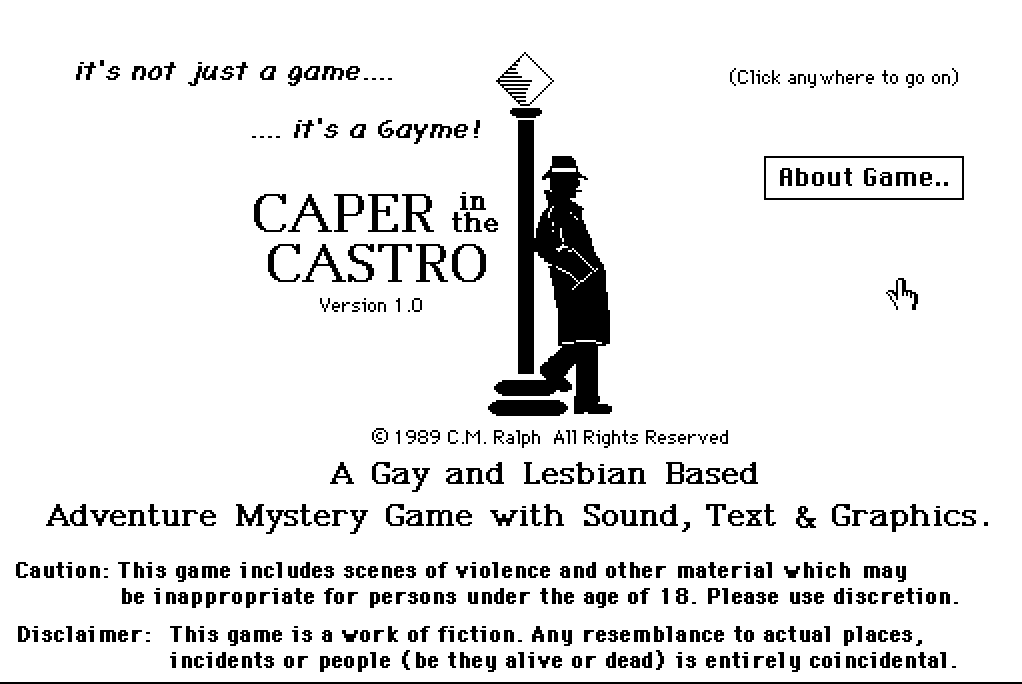
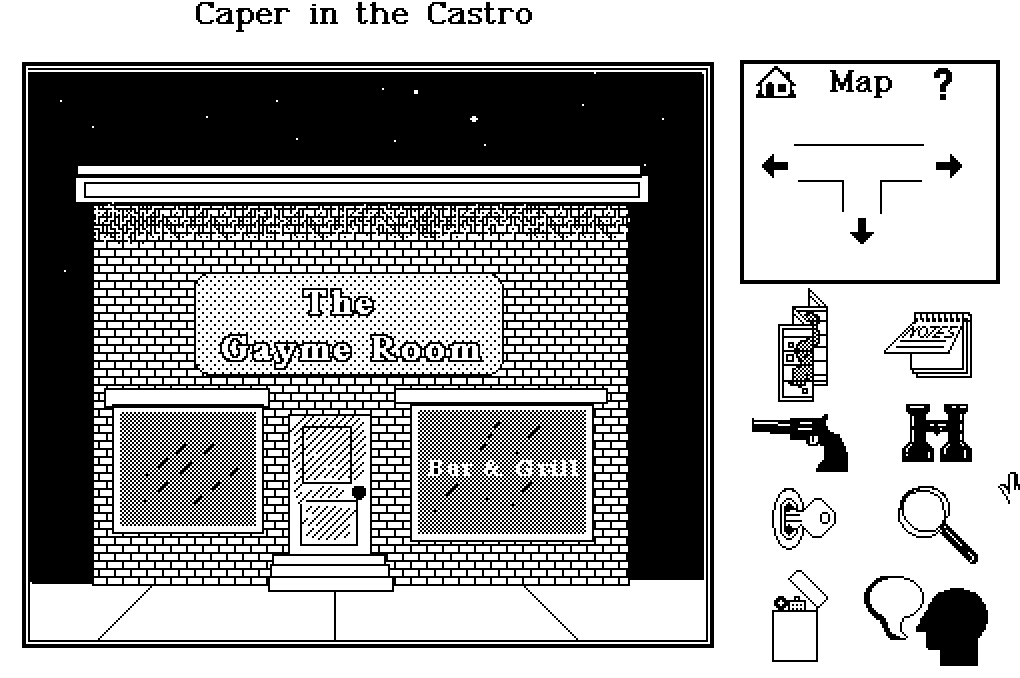
Caper in the Castro is a short point-and-click adventure game created in Hypercard and the earliest known queer game, so I thought it would be fun to check it out during Pride Month. You play as the lesbian detective Tracker McDyke who must find her friend, the drag queen Tessy LaFemme. It’s a very straightforward adventure game where you navigate up and down a street, going into buildings and poking around for clues. Since it was a simple game built in Hypercard, it doesn’t have any inventory items and progress is gated by various notes you take in the game that you will need to use elsewhere. There are death scenes that will force you to restart the game but it’s incredibly quick to get back to where you were before.
I have known about the game for a while but never actually sat down to play through the entire thing and I’m so glad I did. Any flaws the game may have from the lack of depth or the fussy parser, which you briefly use at a few points, was easy for me to overlook because of how charming the game is. I am an absolute sicko for this era of Macintosh games and Hypercard and I loved the art. The game was obviously made at a really dark time and the game encourages people to donate to AIDS charities as a form of paying for the game. I get very emotional seeing people creating queer art during this time and the fact that this was created to be charityware to help others was very moving to me. I was a baby during this time so I also always appreciate any queer art and writing that lets me see what the queer community was doing at this time. The game itself is very campy and messy in a way I really enjoyed (other than the dated language the author apologizes for on the Archive.org page) and I think it would fit in very well with what a lot of experimental queer games that folks are making on Itch.
I’d recommend it, especially if you are interested in queer and/or retro adventure games. It’s not the tightest puzzle design given that the author was working with a limiting tool they didn’t have a ton of experience working with, but I think the art and writing are very charming and it’s an interesting time capsule.
Caper in the Castro is available for free on the Internet Archive and you can repay the author by donating to your LGTBQ+ charity of choice.
This Sunday morning I am thinking about multimedia cd-roms by musicians in the 90s and thinking: “did they play Myst?” I do not care about if any musician was actually a gamer, but because I am a huge dork I keep thinking about the band Queenscryche, in their stage gear, crowded around a desktop computer and trying to figure out the marker switches on Myst island. Because I have nothing better to do, here are my thoughts on various musicians with computer games and if they’ve played Myst. Many of these games are abandonware and playable on modern Windows thanks to The Collection Chamber.
Peter Gabriel, star of Xplora and Eve: Yes, absolutely. He seemed to be very interested in the cd-rom format since he started a games company that produced his two games as well as Ceremony of Innocence. He also contributed music to URU: Ages Beyond Myst and acted in Myst 4
Laurie Anderson, Puppet Motel: I think it’s likely she tried it for a few minutes to see what it was like since she’s stated she has an interest in new technologies and using them when no one really knows what to do with them. She has also done VR installations when VR was becoming a thing again in the mid 2010’s. But according to this interview last year about Puppet Motel, she doesn’t really enjoy games and winning/losing states so I assume she moved on once she “got it.” People should play Puppet Motel.
Aerosmith, 9: The Last Resort, Revolution X, Quest for Fame: Why did people keep going to Aerosmith to ask them to be in their computer game? Only one of these is an adventure game (produced by Robert Deniro) and they just act in it so they barely qualify for this list, but I think they’re aware of what a cd-rom is and that’s it. They’ve probably played some pinball. This is the most I want to think about Aerosmith.
Dan Ackroyd, The Blues Brothers: We know he actually played The Blues Brothers video games but I do not think he played Myst or else we would have seen some sort of cd-rom. Since John Goodman was in the Blues Brothers in the sequel, this is also where I can say that I do not think John played Pyst.
The Beach Boys, Surf City: Absolutely not. Mike Love cashed the paycheck and that was the end of that. If I had to pick the Beach Boy most likely to have played a computer game, I think it’s Al Jardine.
Earth, Wind, & Fire, Isis: Today I learned they had a computer game! I don’t think it’s likely they played them but now I want to play this.
Herbie Hancock, Virtual Nightclub, Living Jazz: He must have at least tried Myst, right? He seems too curious about technology to not have. Anyway, Herbie Hancock rules.
Devo, Adventures of the Smart Patrol: I think Mark and Gerry at least tried it and saw games as the future of the band. This did not happen since the game wasn’t very good and flopped, but the promotional video has that energy. They poked at smartphone apps a few times so new technology is something they have an interest in but I don’t think they ever dug too deep.
Queensrÿche, Promised Land: As much as I want to imagine the band playing Myst, I do not think they have. However, I am fascinated by the MobyGames credits for this game. The brother of one of them is all over the place on this and all the band members are listed as co-designers of their worlds. I don’t buy it.
The Residents, Freak Show, Bad Day on the Midway: Yes, but the band were all in costume when they did. From reading the Laurie Anderson video, it sounds like Voyager and Inscape were the ones reaching out to the bands to make something and not the other way, but I do think the fingerprints of The Residents are all over these and their involvement was more than just cashing a paycheck.
Motörhead, Motörhead: This predates Myst and Lemmy absolutely did not play computer games, but lets all imagine him playing Myst anyway. EDIT: I’m wrong about this one. Lemmy did play arcade games. See the comments below.
Prince, Prince Interactive: I have no idea how much he was actually involved with his game but I think it’s very likely he tried Myst. He was too interested in computers and the internet not to have. He was also probably one of the first people ever to have played The Oregon Trail.
David Bowie, Jump: The David Bowie Interactive CD-Rom, Omikron: He was too interested in technology not to have, since he also had his own multimedia cd-rom (that he wasn’t a fan of since it wasn’t ambitious enough) and Omikron. I think Duncan Jones is over answering questions about his dad since he has his own career and art to talk about, but maybe he would still be up for answering “What computer games did you play with your dad?” since I think most folks like to talk about that.
Frankie Goes to Hollywood, Frankie Goes to Hollywood: They broke up before Myst and I don’t think they were involved with their game either but this Making Of article about the game is good.
Rednex, Inbred with Rednex: Well they know what a computer is because they keep taking down videos on YouTube of people playing their game but I think that’s as far as that goes.
Well that’s all I have to say about all of that. Feel free to comment with your thoughts about other musicians and if they’ve played Myst.
I think a lot of folks who follow this site already know this but people still make text adventure games like during the days of Infocom and they’re still very good! In fact, I think many of them are even better than the classics. That’s not to say the classics are bad, they’re very good, I just think many made post-golden age of text adventures are even better. You can download many free ones on IFDB.
Some that are friendly to beginners that I happen to enjoy are Lost Pig, Galatea, Bronze, and The Dreamhold, but there’s a nice list of more interactive fiction on IFDB’s top 100 list if you’re looking for more to play. Not all of these are text adventures but I also love interactive fiction in the form of Twine games and other forms so no complaints there. I think the commercial text adventure Thaumistry is a good intro to text adventures as well.
If you want to download these free games instead of playing them in a browser, you’ll probably need something to run the files. I think Gargoyle is neat but there’s plenty of options. Some games are also easier to play if you map out the rooms. Personally I love writing these down in a notebook but Trizbort is a nice app for mapping rooms on your computer. I use a desktop version for Windows but apparently there’s now a browser version available.
If you want to see what else folks are up to in the scene, I recommend exploring the rest of IFDB and checking on competitions like IF Comp and Spring Thing. IF Comp has been going on since the 90s. While I stopped following that one for a while because they allowed AI stuff, it seems like they’re starting to clamp down on it so that’s nice.
Anyway, if you’ve never played a text adventure before, give it a shot! Maybe you’ll discover a new genre of games you really enjoy.